Let me first start this little blurb with what
I want out of the exercise of sharing a few electrons all over the interwebs:
1) express myself
2) stimulate some deeper thinking about IM preparation
This is a long one, so buckle up...
FWIW, I had a couple goals for my IM experience last year:
1) explore the limits of my own capacity to "suffer" during the last half of the marathon
2) learn from the whole deal
Anyway, drafting off my
last blog entry, if I were to ask myself the question "what would you do differently about your IM preparation if you had to do it again"? How would I answer that?
I read somewhere that people like short bulleted lists - cuz that makes it easier to remember things and all. Well, here's a bulleted list that summarizes how I would answer that question above:
* shorten the "fill the right" preparation period -> probably down to 8 wks or so from 14
* shorter runs with higher frequency -> maybe 3 one-hour runs rather than one long run and a couple thirty minute jobbers
I don’t really know if the way I went about things is typical or not. If I had to guess, I'd say it's not super typical... And, I reckon it's more towards the "new school" approach side of things than it is towards the "old school" approach of IM preparation. i.e -> I spent maybe 10 hours a week training for this - and incorporated some goin' hard/intensity during that time.
But that is neither here nor there...
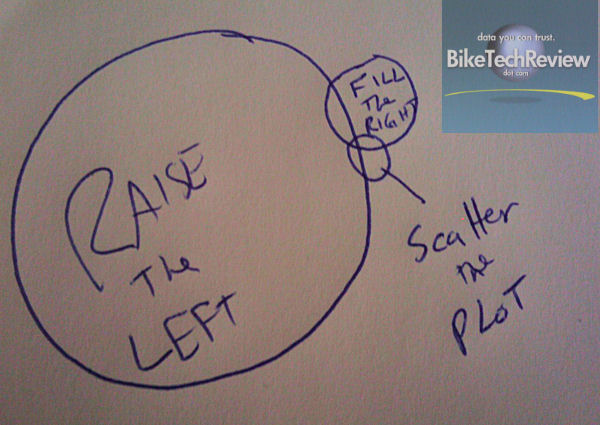
From a more global perspective, I'd characterize my prep as two to three years of
"raising the left" by doing 20 MP and above focused efforts followed by about 14 weeks of
"filling the right".
Huh?
Yeah, that's a long way of saying that I spent a lot of time goin' hard, and a little bit of time making sure I figured out how to meet the KJ demands of the effort. In the end, as noted above, the KJ demand/burn rate adaption deal took way less time than I planned for to meet/figure out.
FlexibilityMy initial plan was very detailed. I wrote it all out and made a sweet, neat looking excel calendar - y'know, it probably looked like one of those canned training plans an interwebs coach might dole out...
Workouts were planned for the final 14 wks leading up to the event...but yeah, that plan didn't work out - If I stop and really consider the kind of person I am - I reckon I'm not really a big "plan" guy... There's just too many distracting details and whatnot. The way the whole "plan" thing that I put together actually worked out is a pretty interesting look into some of my internal workings. I mean, there is a definite part of me that wants to be able to control thangs and then just execute when necessary. There's another, probably overriding, part of me that is completely comfortable goin' with the flow, and taking things day by day.
When it came to the IM preparation, in the end, it was a global plan that was put into place with a lot of day-to-day flexibility. I never trained "fatigued" - if it felt like I needed an extra day of rest...well, then, I took it. That carries over into my general bike racing training as well - if I'm tired, I rest. Ride Hard. Rest Hard. That's my deal.
I had a pretty simple set of goals on a weekly basis -> one long run, one long bike, swim technique development, and one day of "raising the left" via a "classic vo2" bike ride.
That was it. Pretty simple.
Here's how things kinda went on a weekly basis, with a couple deviations when necessary:
Mon: complete rest
Tue: AM swim for 45 minutes doing drills. Noon hour vo2 bike workout 60 minutes
Wed: run 30-45 minutes
Thurs: swim for 45 minutes doing drills
Friday: complete rest
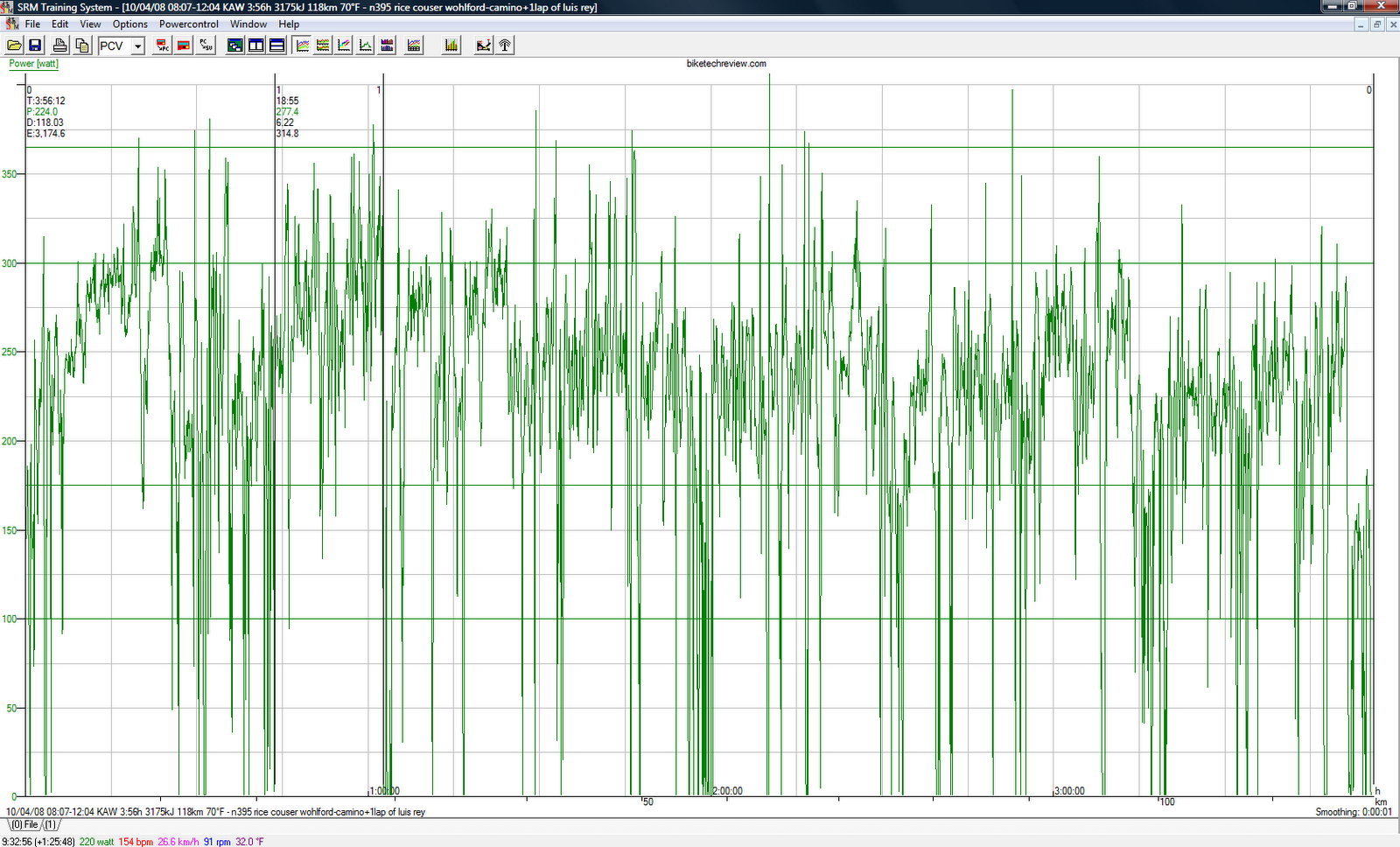
Sat: "fill the right" bike ride (3200kj in as little time as necessary -> about four hours) followed up by a 30 minute "run". This bike ride was pressure on the pedals, drillin' it for the duration. Hardest workout of the week by far!
Sun: EZ bike ride with no real KJ goals for 1:45; followed by a long run that progressed to 14 miles or around 2 hours
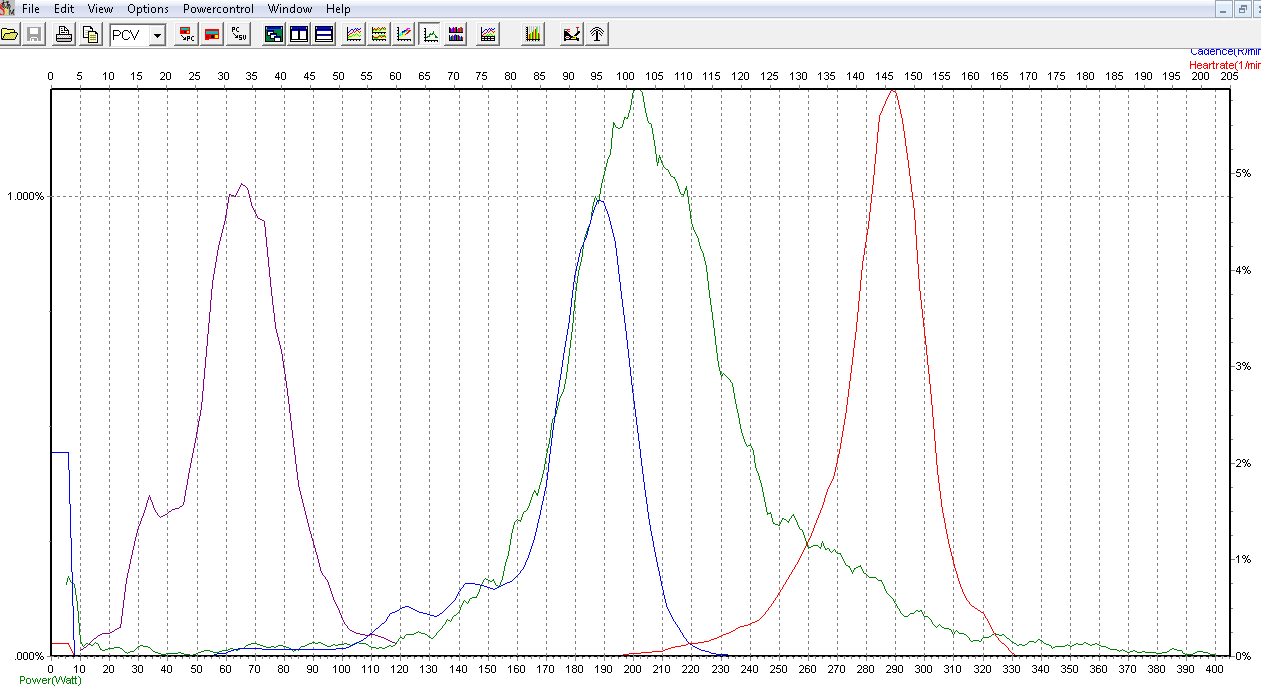
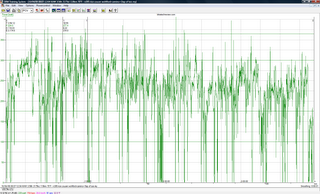
I had estimated that the IM bike ride would take me ~3200KJ to complete, so I targetted that KJ level in my "long" Saturday rides. Though, I frickin' drilled it to burn that 3200KJ in my training. Interesting to note that it only took me about 3-4 rides to go from doing 1600 KJ rides at a nearly maximal pace to routinely hitting 3200KJ at a nearly maximal pace - these rides topped out at around 4 hours or so. Here's an example of one of those 3200KJ rides that were the cornerstone of my bike ridin':
About 5 weeks out I tried my hand at going "long" as some folks like to say:
October 11During this effort, I'd get up and swim for an hour continuosly, go home and eat a bit...then ride at what I figured would be my IM bike watt pace for 100 miles, followed up with an hour run.
In the last three weeks or so, These style of days were mental slogs, but they did give me some confidence and allowed me to figure out how to fuel things.
November 1 was my second
"long" day.
And this effort really drilled into me what things might feel like if it was a stinkin' hot/windy day, and I forced too much of my chosen fuel down during the bike ride. That was a really good learning day for me. I spent that hour run after the ride feelin' bloated and pretty crappy - too much crap sloshin' around in the ol' belly...lesson learned - if it's stinkin' hot, pull back on the reigns a bit and relax...
Another of the deviations from the general week schedule outlined above include my issues with the running aspect. I'm not a runner - never really ran long distances at any point in my endurance sport career - though, I'm pretty sure I ruined my knees while playing lots of youth basketball (I can remember being a "gym rat" during the fall/winter time playing pick-up games all day long for the better part of my youth)...and those basketball knees have always been my limiter when running "longer" distances, it seems.
I really did try and plan for this...I actually started preparing for the run sometime in July or thereabouts... I progressed over a three-four week period starting at around a 30 minute EZ jog for my long run of the week and building it up 10 minutes a week. Well, like an idiot, I felt really good on one of those days and figured I'd see how fast I could run that last 15 minutes of a 45 minute run. I went pretty fast for me - laying down a sub 6 minute mile for the last little bit...I kinda felt a bit of a twinge in my knees when I was doing it, and sure enough, the next time I tried to run, I couldn't make it more than 5 minutes before the pain in my knees was too intense to continue.
Well, yeah, that was a pretty stupid thing to do in hindsight...and, as it turned out, I could not run for a couple weeks...and then I followed that up with walking 2-3 times a week for 20 minutes at a time for a few weeks... that put me into late august or so before I was able to "run" again without pain. I worked back into things and was able to string together five days of 30-45 minute runs with family up in p-town - which was a great way to kick the last 14-ish weeks of preparation off!
My long run progressed well up until the end of september, where I completed
a long run of around 13.5 miles... but, I could feel my knees barkin' the last 20 minutes of that sucker, and it pretty much freaked me out...so I went with the flow, and tweaked things a bit.
How'd I tweak things? Well, I cut back my long run to 1:30, and then in late October, early November, I started doing multiple one-hour runs during the week -> i.e, I upped my frequency in order to make up/compensate for my fear of not getting in a longer run.
So, yeah, if I were to do it again, I'd forego the long run for quite awhile, and do more frequent shorter runs of 1-1.5 hours. That might have saved my knees for
race day...then again, maybe not!
Taper?I'm not a real big believer in this kind of deal when it comes to long duration events such as an IM. A two week long "taper" - where one actually tapers off their KJ expenditure might be good for shedding some prolonged, avoidable, unecessary fatigue though...but, since how I approached things never really left me carrying loads of physical fatigue, well, there's no real point in doing a long confusing tapering off of KJ's. I just made sure my legs felt good on the big day!
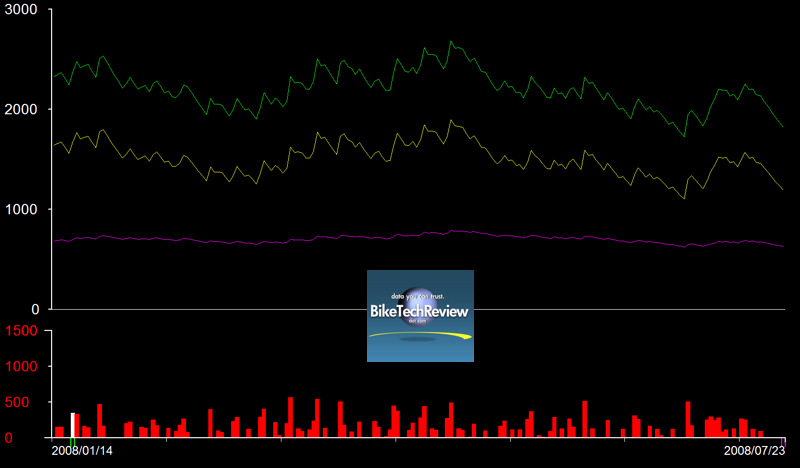
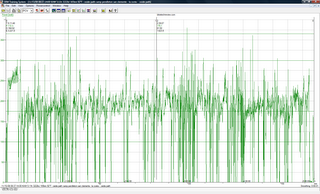
This approach, and respecting how my body was reacting to things, is why I kept the KJ train rolling all the way up to the long day I laid down 8 days out from IMAZ:
Y'know, honestly, I wonder how fast all those guys who carry six weeks+ of serious, significant, fatigue and then taper off their KJ's in the two weeks prior to their IM effort might go if they tried a different approach? Maybe one day, we'll find out, eh?
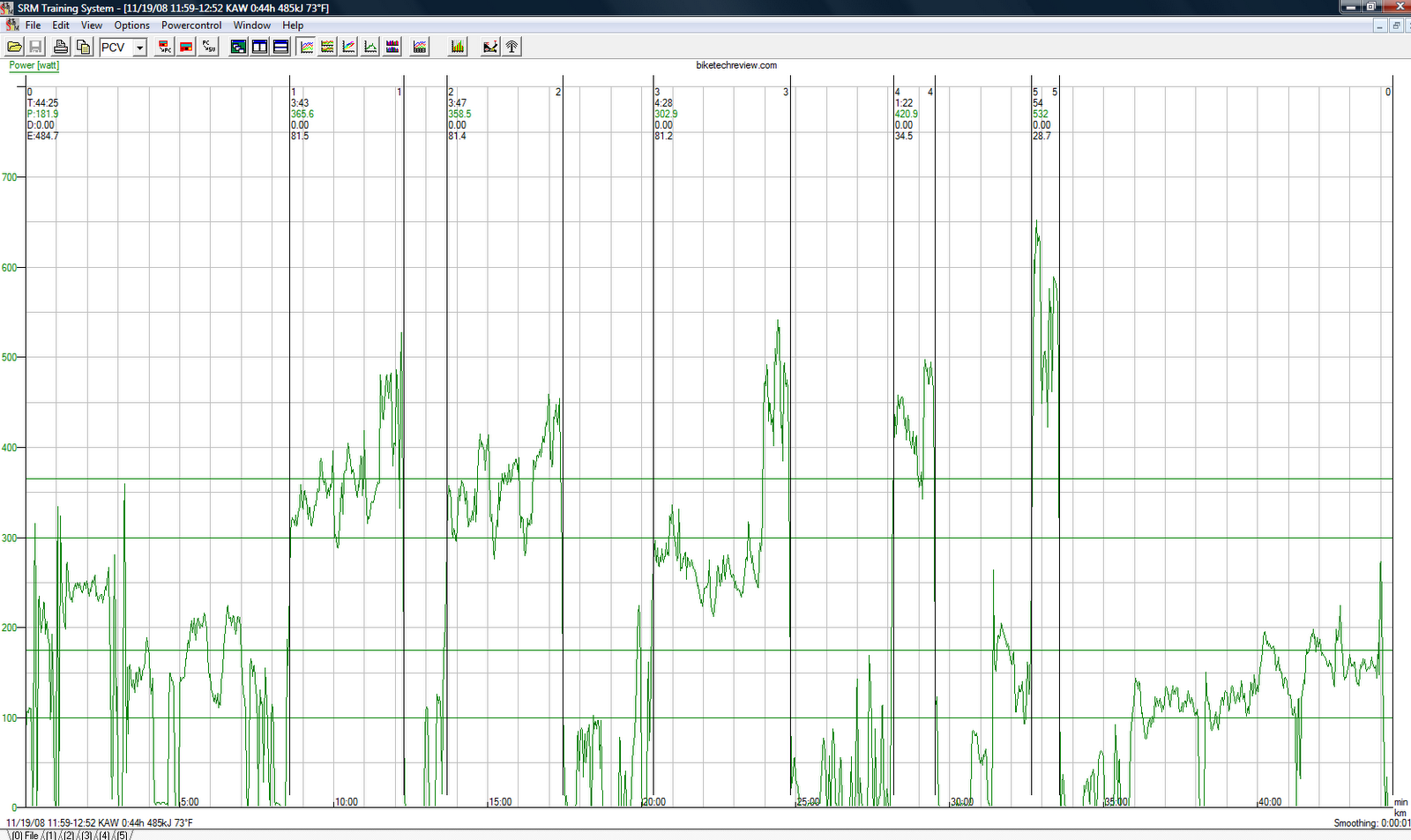
Lightin' it upHere's what I did four days out from the effort (after fully recovering from the 8 day out big KJ day):
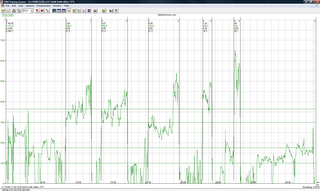
Yeah, I lit it up pretty good in the week preceding IMAZ. Above shows multiple efforts at 2+ times what I was going to target for an IM power target - sometimes, crazy physiological/hormonal things can happen when you lay into a series of crazy high intensity efforts on the bike just before a big event. I recovered from this sucker really quickly, FWIW. Did it help? Well, maybe, but it sure didn’t seem to hurt things.
There are some other nuggets I haven't mentioned above, that you might be interested in reading about...
Did you know that I rode my TT bike less than 6 times during the 14 weeks I was focusing on IMAZ? Yeah, I did the bulk of my riding on my road bike... the three long days described above were on the TT bike, and a couple more rides in the last week (including the shakedown spin up the beeline hwy on the day prior to IMAZ) were on the TT bike. That's it.
I targetted 170W for my IM bike power and rode to an official 5:16:xx split including 3 honey-bucket stops. This watt level was roughly 55% of my 20MP at the time. Here were my SRM time and watt splits for each of the three laps of the bike course:
Lap 1: 1:42:33 @ 170W
Lap 2: 1:43:19 @ 172W
Lap 3: 1:43:35 @ 168W
I was well within myself, there, eh? ;-)
I took down about 1100 calories +/- during the bike ride -> which was about 200 calories per hour.
I swam a 1:24:xx - which was way faster than I had done for the full distance 10 days out while swimming in a pool without a wetsuit.
I "ran" the first half of the marathon at just over a 9 minute/mile pace - which was my targetted run pace.
I walked 8 miles of the marathon, cuz my body broke... :-(
I waddled across the line in 11 hours and 35 minutes.
I didn't bonk.
I didn't "suffer" like I wanted to "suffer", and thus, felt like I "failed" to achieve one of my IM experience goals.
I don't know if I'll do that whole deal again! :-o
Hey, I don't think there's any rocket science here in my approach, or any approach that you'll read about out there. I raised the left for a really long time (2-3 years), then astoundingly quickly filled the right. Then, on race day I "run what I brung" so to speak. Though, as I mentioned in that neat bulleted list up above, I think I would tweak a few things if had to do it over again:
* shorten the "fill the right" preparation period -> probably down to 6-8 wks or so from 14 wks
* shorter runs with higher frequency -> maybe 3 one-hour runs per week rather than one long run and a couple thirty minute jobbers.
Eager to hear how you prepared for your IM,
-k
Labels: ironman, racing, random, training, triathlon